

Review: 2026 Restaurant Technology Outlook — Efficiency and Data in Foodservice
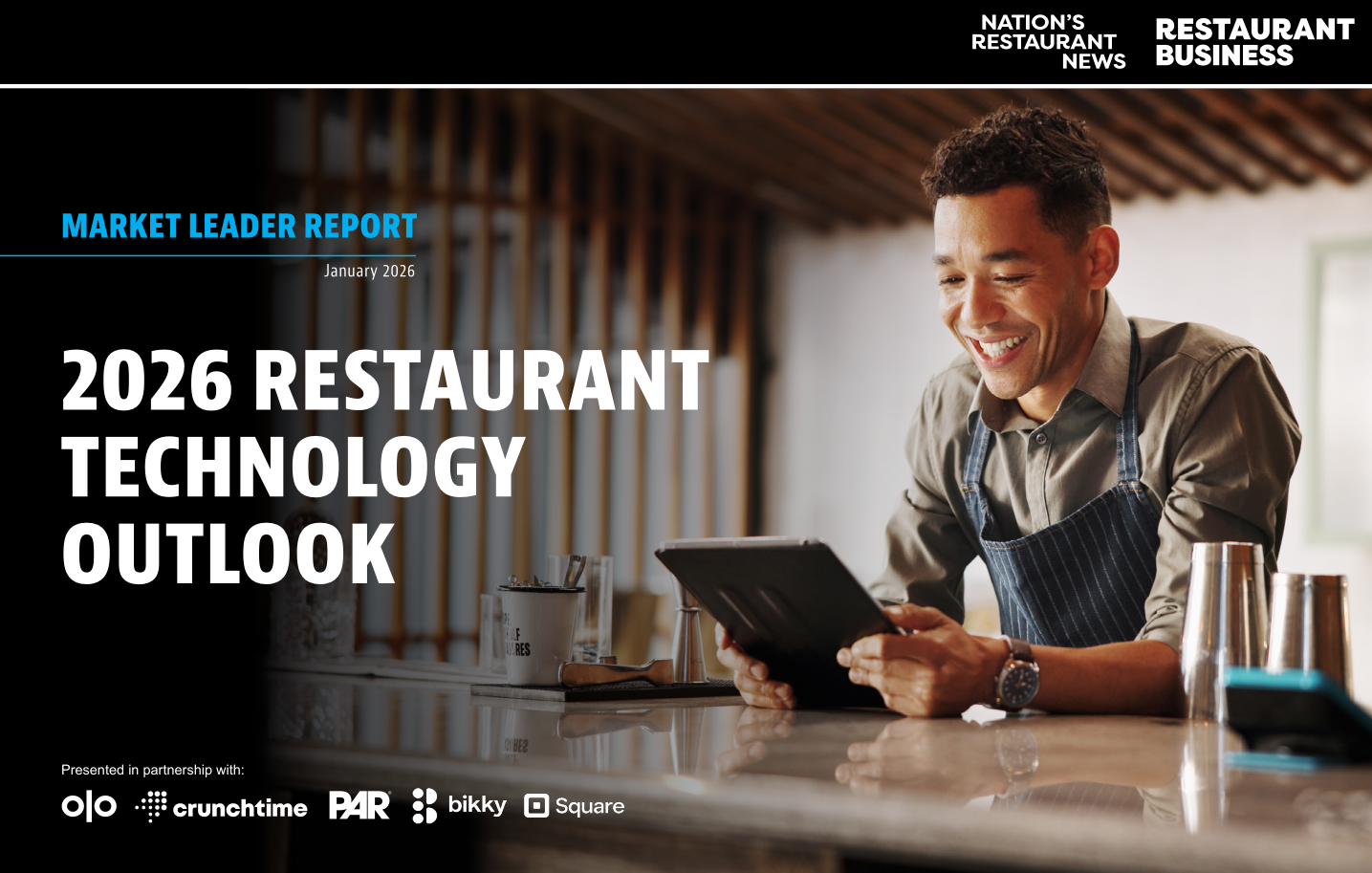
Since late last year, when we decided to focus on foodservice, I started following the sector's publications a little more closely. A recent one that speaks directly to what we do is the 2026 RESTAURANT TECHNOLOGY OUTLOOK. Published by Nation's Restaurant News, in partnership with Olo, Crunchtime, PAR Technology, Bikky and Square, it obviously caught my attention: technology and food.
Let me start with the basics — who the companies in this group are:
- Olo: Specialists in digital ordering interfaces, customer retention and data analysis to personalize the consumer journey.
- Crunchtime: Focused on back-of-house management, helping brands control inventory and labor costs.
- PAR Technology: Provider of unified ecosystems that integrate POS hardware with AI-native software solutions.
- Bikky: A customer data platform that turns transaction information into insights for marketing and loyalty.
- Square: The payments and POS giant, offering integrated management tools for operations of every size.
In other words, strong names in foodservice technology on the international market.
Maybe one day Softerize will join that group 😉
But on to the content!
Key Findings
According to the report, the main highlights are:
- Brands Are Caught in the Middle of the P&L: As IT investment accelerates, operators say their technology has to control costs and find efficiencies in order to maximize ROI (Return on Investment). Yet they are more likely to spend on solutions and strategies that drive top-line revenue and customer traffic in an economy that is tough on consumers.
- The Channel Mix Is Unlikely to Change — But Stay Alert: Respondents were less focused on adding new ordering channels (such as catering or delivery) and more on making the tech stack efficient and data-driven. Demand for digital and off-premises ordering is steady, but unlikely to dominate new investment.
- Data Tools Are Having Their Moment: Operators' appetite for better analytics and reporting platforms is catching up with adoption levels for order management, prime cost and marketing technologies. They identified insights as a key ingredient in their most important strategies.
- No More Shots in the Dark: Respondents said the greatest potential value they could extract from unifying and analyzing customer data would be equipping their culinary and marketing teams with the information needed to identify winning menu items and audience segments.
- Inventory Management Is on the Rise: Greater scrutiny of profitability is putting food costs squarely in managers' sights, leading many to explore and integrate inventory management solutions. Analytical operators and early AI adopters are especially interested in software to control COGS (Cost of Goods Sold).
- Productivity Remains the Top Labor Priority: Current and future use cases for labor technology lean more toward boosting productivity than toward training. That could drive greater demand for dashboards giving managers a real-time view of hourly team performance during busy shifts.
- Overload on the Rise: IT leaders' main challenges look much like they did in previous years: specifically, rising costs and the hard work of integrating disparate pieces of the tech stack. The sense of overload grew this year, which should fuel the search for vendor consolidation.
- Accelerating Interest in AI: Adoption of and interest in artificial intelligence grew compared with last year. Respondents at the forefront of these capabilities are looking to widen their competitive edge through better forecasting, data analysis and more sophisticated strategies.
Investment Trends: The End of the Frills
The report shows that commitment to investing in technology remains unshaken: nearly 9 out of 10 operators plan to invest over the next 12 months. The goal, however, has shifted.
- A Focus on Efficiency: Instead of bells and whistles for the customer, the focus is now on unlocking operational efficiency.
- POS and Management Systems: Investment in POS systems rose to 53% (up from 40% last year), and inventory and labor management also gained prominence.
- Softerize: This fits perfectly with what we do. While the market looks to optimize what it already has, tools like our Material Checklist and Material Requests make sure the back office doesn't lose money to marketing waste.
Top Priority: Profitability and Cost Control
For 57% of operators, the most important capability technology can offer in 2026 is controlling costs and improving profitability.
- Team Productivity: There was a jump in the desire to use technology to make hourly employees more productive (31%, a significant increase over the previous year).
- Real-Time Visibility: Managers want dashboards that show team performance in real time.
- Softerize: Our system has Checklists and Tasks that help productivity a great deal. By automatically generating action plans from audits, we take the administrative load off managers, letting them focus on the operation.
The Barriers: Integration and Overload
It isn't all roses. The report points out that the feeling of being overwhelmed by the number of technology options rose from 14% to 21% in a single year.
- Data Silos: The biggest challenge remains the lack of integration between different vendors (45%) and the lack of staff to manage these tools (32%).
- Betting on End-to-End Solutions: 53% of operators prefer to buy integrated solutions from fewer vendors in order to reduce complexity.
- Softerize: We offer a centralized solution bringing together Calendar, Chat, Documents and Audits, on top of the features already mentioned. That removes the need for several isolated tools, tackling head-on the fragmentation the report describes.
We have discussed internally the possibility of narrowing down to one feature or another, but every feature we have is used by our customers. What the report shows is that the trend is precisely toward integrated solutions, not fragmented ones. So we will keep investing in a complete product, one that serves our audience's needs as well as possible.
The Artificial Intelligence Leap
AI is no longer just a promise. The group of "AI adopters" rose to 27%.
- AI in the Back Office: The most valued use isn't the bot that talks to the customer, but the AI that helps with data analysis and reporting (64%) and with forecasting traffic and sales.
- Softerize: In our system we already use AI to provide insights on checklist responses, helping the franchisor automatically understand patterns of excellence (or failure) across the whole network. And we have a few more initiatives that will be put into practice over the course of the year. Always with a focus on bringing more intelligence to the back office.
Strategic Data: From Gut Feeling to Precision
Operators' confidence in their own data is still low: only 13% say they "definitely" optimize the data they collect.
- What they want to measure: The focus is on understanding which menu items drive traffic (52%) and identifying how store operations affect customer retention (33%).
- Real-Time Monitoring: There is high demand for tracking metrics such as kitchen ticket times and order accuracy on dashboards visible to the team.
- Softerize: With our Checklists, we have a feature for collecting structured data in the field, with real-time visibility, which allows for immediate course corrections instead of waiting for the month to close.
This point about confidence in the data is a very interesting one, because one of the things I bring up with clients (especially new ones) is the quality of the data they are collecting. It's common for us to receive checklists with N/A on every question, for example. That lets an employee in a hurry skip past some questions without giving them proper attention.
A well-designed checklist — with clearly defined possible answers, dependencies on previous answers (does the restaurant have a dining room? A restroom?), and mandatory fields — can ensure the data collected is of good quality, and that is essential for the analysis to be accurate and to genuinely support decision-making.
Conclusion
The 2026 report confirms it: the future of foodservice isn't in flashy tech, but in technology that solves the real problems of costs, processes and people. At Softerize, we're ready to help your chain navigate that shift with less overload and better results.
📌 This article was originally published on LinkedIn, in Portuguese. Read it and leave a comment there too!